Real Estate Letter of Intent Forms: Lease, Purchase, or Ground Lease
- bzdealman
- 6 hours ago
- 5 min read
Most commercial real estate professionals only realize they picked the wrong real estate letter of intent form after negotiations stall mid-deal.
By then, the missing deal points have already triggered an expensive attorney rewrite, and the other party has started asking questions you cannot answer.
A letter of intent looks simple on the surface, but the version you need changes based on whether you are leasing retail space, buying a shopping center outright, or negotiating ground beneath a new build-to-suit.
This guide helps you match the right LOI to your transaction before you draft a single deal point.
A real estate letter of intent differs by transaction type. Lease, purchase, and ground lease deals each need a different form, and picking the wrong one costs you time and legal fees.
Why the Wrong Letter of Intent Form Costs You Deal Time
A single missing clause in a letter of intent can stall a shopping center deal for weeks.
Teams often use a lease LOI for what is actually a ground lease negotiation. Skipping the land-use and reversion terms this way leaves the deal exposed. Your attorney then flags the gap once due diligence starts, and both sides renegotiate terms they thought were settled.
Vague or self-contradictory term sheets create the same problem.
“Seattle's Office of Economic Development outlines in its commercial lease guidance that a letter of intent should outline the important terms of a deal before formal drafting begins, not after.”
Using a template built for a different transaction type is what leads to costly mid-negotiation surprises.
Shopping center deals move fast once both parties sign. A lease LOI that skips CAM caps or co-tenancy language leaves those terms open for the landlord to define later, often in ways that favor whoever drafts the final lease first.
Matching the form to the transaction from day one keeps you in control of that language.
Lease LOI vs. Purchase LOI vs. Ground Lease LOI: How to Tell Which You Need
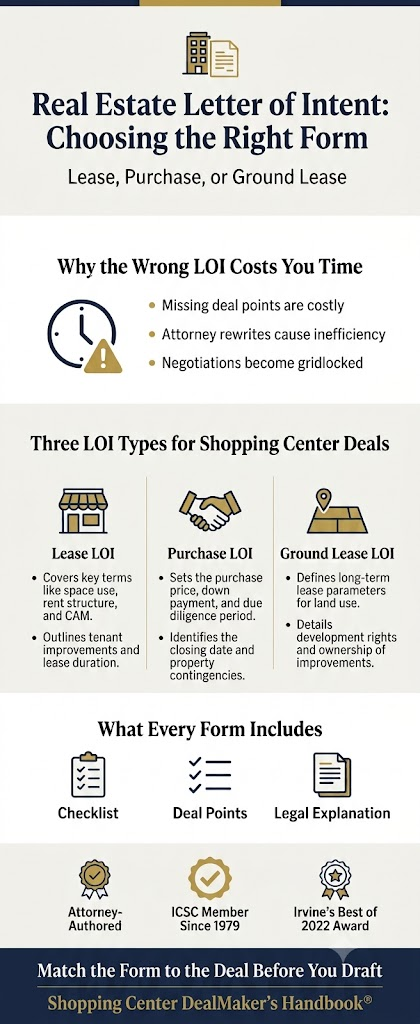
A real estate letter of intent for a shopping center deal falls into one of three categories, and each one protects a different set of deal points.
You need a Lease LOI when you are negotiating tenant space inside an existing shopping center, not ownership of the property.
“NYC's Department of Small Business Services confirms in its commercial lease guide that a letter of intent or term sheet is typically the first document tenants prepare once they select a space,” covering rent structure, term length, and improvement allowances.
You need a Purchase LOI when you are acquiring the shopping center site itself.
“The Connecticut Bar Association's commercial real estate materials note that a letter of intent has become an integral part of purchasing or leasing real estate,” and purchase-specific versions must address price, earnest money, and due diligence timelines a lease LOI never touches.
You need a Ground Lease LOI when you are leasing the land beneath a build-to-suit pad or outparcel.
“The International Council of Shopping Centers' ground lease seminar materials explain that ground leases require distinct economic and reversion terms that neither a lease LOI nor a purchase LOI captures.”
Choosing among these three matters because no standard exists to guide you.
“The Texas Real Estate Research Center at Texas A&M University confirms that no state real estate commission, realtor association, or bar has created a standardized LOI form for any of these transaction types.”
What Each Shopping Center DealMaker's Handbook® LOI Form Includes
Each form in this catalog targets one specific transaction type instead of offering a one-size-fits-all template.
The Lease LOI form addresses rent structure, exclusivity, radius restrictions, and tenant improvement responsibility.
The Purchase LOI form covers price, earnest money deposits, financing contingencies, and closing conditions specific to a shopping center site.
The Ground Lease LOI form addresses land-use terms, reversion rights, and long-term economic escalation clauses unique to ground leases.
Every form ships with a checklist and legal explanation, so you can confirm which deal points apply to your transaction before you send anything to the other party.
How Shopping Center DealMaker's Handbook® Approaches Letter of Intent Forms
You do not have to take a generic template's word that it covers your deal correctly. Author Bruce Zimmerman built these forms from decades of shopping center development experience.
He holds licenses as a California attorney and California real estate broker, and he has belonged to the International Council of Shopping Centers since 1979, the same organization behind the ground lease materials cited above.
That background shows up in how industry leaders describe the forms.
Albert J. Auer, Past President of the International Council of Shopping Centers, said, "Practical forms...in an easy-to-use format. An incredible resource for the deal maker, new, creative, and thorough. Why didn't someone think of this before!"
The Handbook also earned Irvine's Best of 2022 Award and received editorial recognition from the American Bar Association's Probate & Property journal.
These forms serve as educational and reference resources; they do not substitute for attorney counsel on your specific transaction.
Frequently Asked Questions (FAQs)
Q1. Is a real estate letter of intent legally binding?
A real estate letter of intent typically leaves the core deal terms non-binding, though specific provisions such as confidentiality or exclusivity periods can carry binding weight. The binding scope depends entirely on how you draft the individual clauses.
Q2. Do I need a different letter of intent for a ground lease versus a retail lease?
Yes. A ground lease LOI addresses land-use and reversion terms that a retail lease LOI omits, since you are negotiating rights to land rather than an existing structure.
Q3. Can a letter of intent replace an attorney?
No. A real estate letter of intent gives you a starting framework for negotiation. It documents deal points so both parties can move forward, but you still need attorney review before signing a final lease or purchase agreement.
Q4. How long does a real estate letter of intent negotiation typically take?
Negotiation length varies with transaction complexity, but a deal-point-specific LOI form helps both sides identify open issues faster than starting from a blank page.
Q5. What deal points should a shopping center letter of intent always include?
Every LOI should name the property, the price or rent, the timeline, and the contingencies both sides expect. Leaving any of these open invites disputes once the formal lease or purchase agreement goes to your attorney for drafting.
Choose the Right Form Before You Draft
Your next step for a real estate letter of intent is straightforward. Identify whether your transaction is a lease, a purchase, or a ground lease, then start with the form built for that exact structure.
Matching the correct letter of intent form to your deal from the outset gives you a stronger foundation than editing a generic template mid-negotiation.
book or discuss your purchase with Shopping Center DealMaker's Handbook®.


Comments